

The Nigerian government has officially ended fuel and foreign exchange subsidies, a policy that has been debated for years.

Minister of Finance Wale Edun announced the decision at the World Bank’s Nigeria Development Update presentation in Abuja.
According to Edun, the subsidies had drained the economy of over N10 trillion, equivalent to 5% of Nigeria’s Gross Domestic Product (GDP).
The minister emphasized the financial strain caused by these subsidies.
To address unemployment, the government has introduced a housing finance plan. This plan features a mortgage scheme with near single-digit interest rates, aiming to boost construction activities and generate significant job creation.
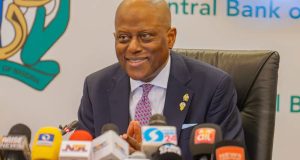
Central Bank Governor Olayemi Cardoso explained the recent 0.5% interest rate hike, citing anticipated inflation trends. He reaffirmed the bank’s commitment to data-driven policy decisions.
Bauchi State Governor Bala Mohammed expressed concerns about insufficient funds allocated to state governments, reduced purchasing power of Nigerians due to federal policies, challenges implementing the new N70,000 minimum wage, and funding essential infrastructure.
Amal Hassan, CEO of Outsource Global Limited, urged the government to create a more attractive environment for investors by “de-risking” the economy.
World Bank Senior Vice President Indermit Gill emphasized the need for unified efforts among Nigeria’s economic units to drive reforms and growth.
This move follows President Bola Tinubu’s earlier announcement to remove fuel subsidies, expected to save N8 trillion annually.