

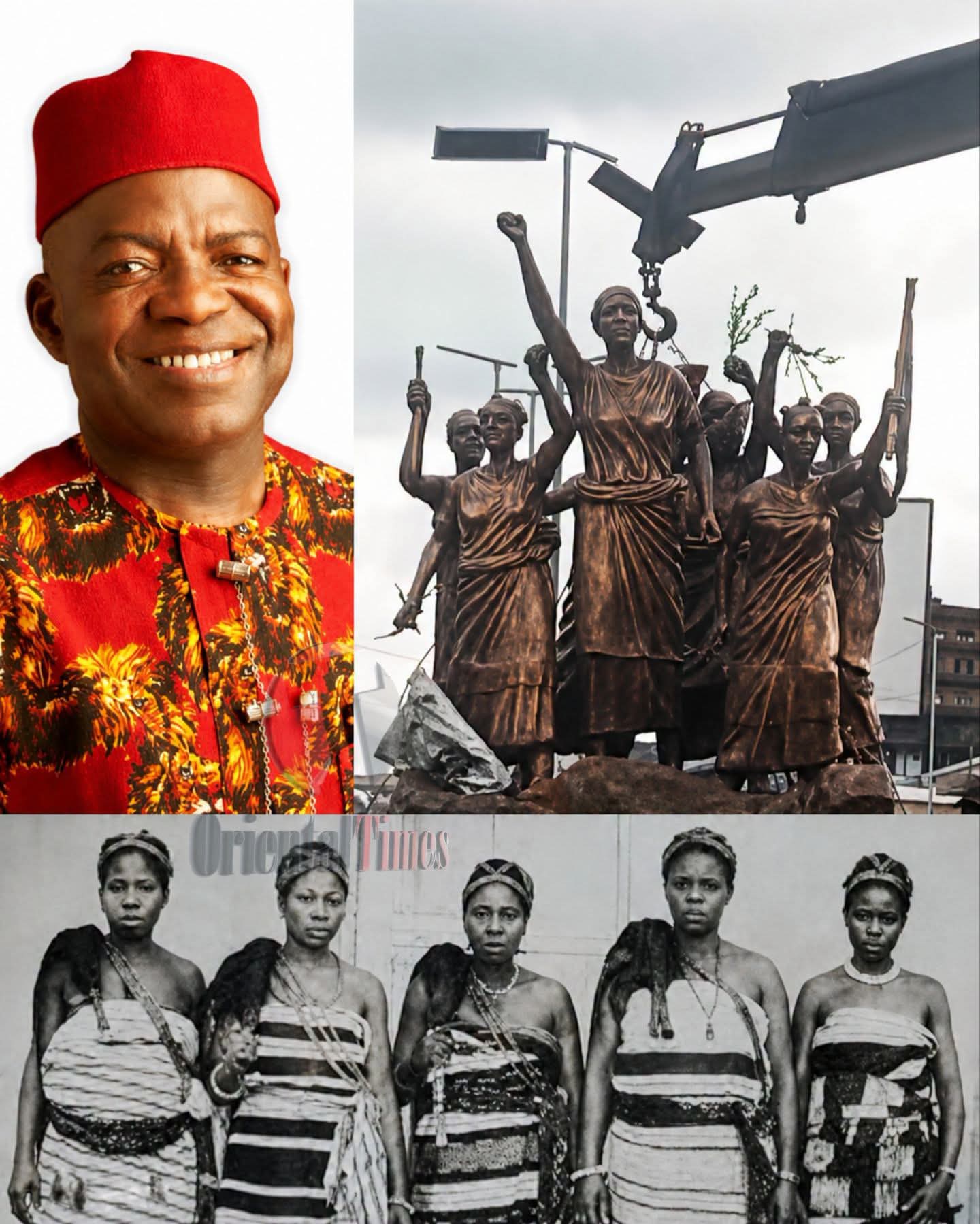
Gov. Alex Otti Honours Heroines Of 1929 Aba Women’s War With Statues In Aba
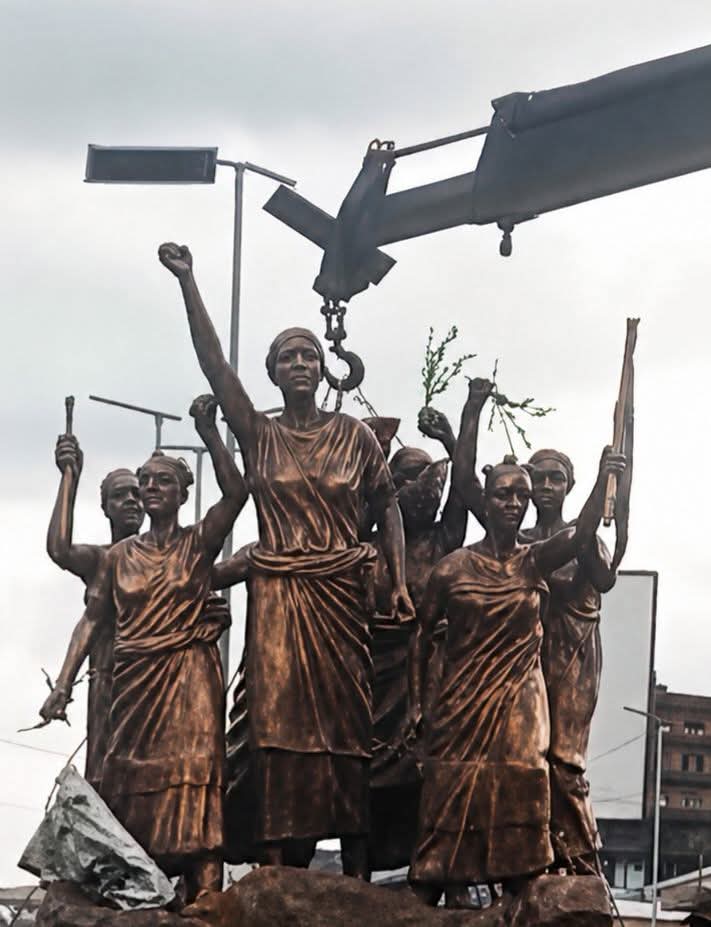
Nearly a century after thousands of courageous women rose against the injustices of British colonial rule, their bravery is receiving renewed recognition in Aba, Abia State, as Governor Alex Otti honours the heroines of the historic 1929 Aba Women’s War with statues commemorating their sacrifice and enduring place in Nigeria’s history.
The tribute is more than a public monument. It is a symbolic act of remembrance for the women who dared to challenge an oppressive colonial system at a time when speaking truth to power could come at an enormous personal cost. Their story is one of courage, resistance and the determination of ordinary people to defend their dignity, livelihoods and fundamental rights.
Historically described in British colonial records as the Aba Women’s Riots of 1929, the uprising was one of the most significant anti-colonial protests in southeastern Nigeria. What began amid growing fears over colonial taxation and administrative interference developed into a mass movement involving thousands of women across communities in present-day Abia, Imo, Rivers and other parts of the former colonial Eastern Provinces.
These women were not fighting merely for themselves. They were defending their families, their economic independence and the social institutions that had sustained their communities for generations. Their protest became a powerful statement against a system they believed threatened their survival and stripped them of their voice in decisions affecting their lives.
A protest that shook colonial authority
The immediate tensions that fuelled the uprising centred on fears that the British colonial administration intended to impose taxation on women, alongside existing grievances over warrant chiefs, local administration and the erosion of traditional political structures.
Under the colonial system, British officials had empowered warrant chiefs to exercise authority in many communities, sometimes with little regard for established customs and indigenous systems of governance. The resulting abuses, alongside concerns about taxation, economic hardship and the treatment of women, deepened resentment.
The breaking point came in November 1929, when women in parts of present-day Imo State protested against colonial officials and the assessment of taxable wealth. The demonstrations spread rapidly, drawing women from numerous communities into a coordinated campaign of resistance.
Using traditional methods of collective protest, including the practice widely known as “sitting on a man” or “making war,” the women gathered in large numbers, sang protest songs, danced, surrounded administrative buildings and challenged the authority of colonial agents and warrant chiefs.
Their mobilisation was remarkable for its scale and organisation. Women who might otherwise have been separated by distance, community boundaries and differences in local circumstances united around a common grievance: they would not remain silent while policies threatened their livelihoods, autonomy and dignity.
The human cost of the struggle
The uprising was met with a violent colonial response. British authorities deployed armed police and military personnel to suppress the demonstrations, and shootings at several locations resulted in the deaths of numerous women, with many others injured.
Although historical accounts differ on the precise number of fatalities, the loss of life remains one of the most painful aspects of the episode. Among the communities affected were those around Aba, Owerri and other parts of the colonial Eastern Provinces, where the protests exposed the deepening crisis of legitimacy facing British rule.
The women’s resistance also led to investigations into the disturbances and increased scrutiny of the warrant-chief system. Colonial authorities subsequently undertook administrative reforms, including changes to the system of local governance, although the broader struggle against colonial domination continued for years.
The Aba Women’s War did not immediately end British colonial rule, nor did it resolve every grievance that had provoked the uprising. Nevertheless, it demonstrated that women could organise on a massive scale, confront an entrenched authority and force a colonial administration to reckon with the consequences of its policies.
A legacy that history must never forget
For generations, the Aba Women’s War has stood as a defining chapter in Nigeria’s anti-colonial history and a landmark in the story of women’s political participation. It challenged the notion that women were merely passive observers of public affairs and demonstrated the power of collective action in confronting injustice.
The heroines of 1929 were traders, farmers, mothers and community organisers. Yet, when their communities and livelihoods came under threat, they emerged as formidable defenders of their rights. Their courage helped establish a legacy that continues to inspire conversations about accountable leadership, gender equality, civic participation and the right of citizens to question authority.
By honouring these women with statues in Aba, Governor Alex Otti’s gesture brings their story into public view and offers present and future generations an opportunity to reflect on the sacrifices behind the freedoms and political consciousness enjoyed today.
For Abia State, the monuments also carry a deeper historical significance. Aba was not simply a geographical location associated with the uprising; it became part of the enduring identity of a movement that demonstrated the strength of women united by a common cause.
Nearly 100 years later, the message of the Aba Women’s War remains as relevant as ever: no society can achieve lasting justice by silencing the people whose lives are affected by its decisions.
The women who marched in 1929 could not have known that their struggle would become a lasting symbol of resistance across generations. They acted because they believed that injustice had to be challenged, even when the price was steep.
Today, their story deserves more than a passing mention in history books. It deserves to be remembered, taught and honoured — not only through statues, but also through a continued commitment to dignity, fairness and the courage to stand against oppression.
Their voices may have been met with gunfire nearly a century ago, but their legacy has survived. In Aba, their memory now stands in stone, a reminder that the courage of ordinary women can leave an extraordinary mark on the history of a nation.